
The Complete Guide to Understanding Introversion and Extroversion Through Quizzes
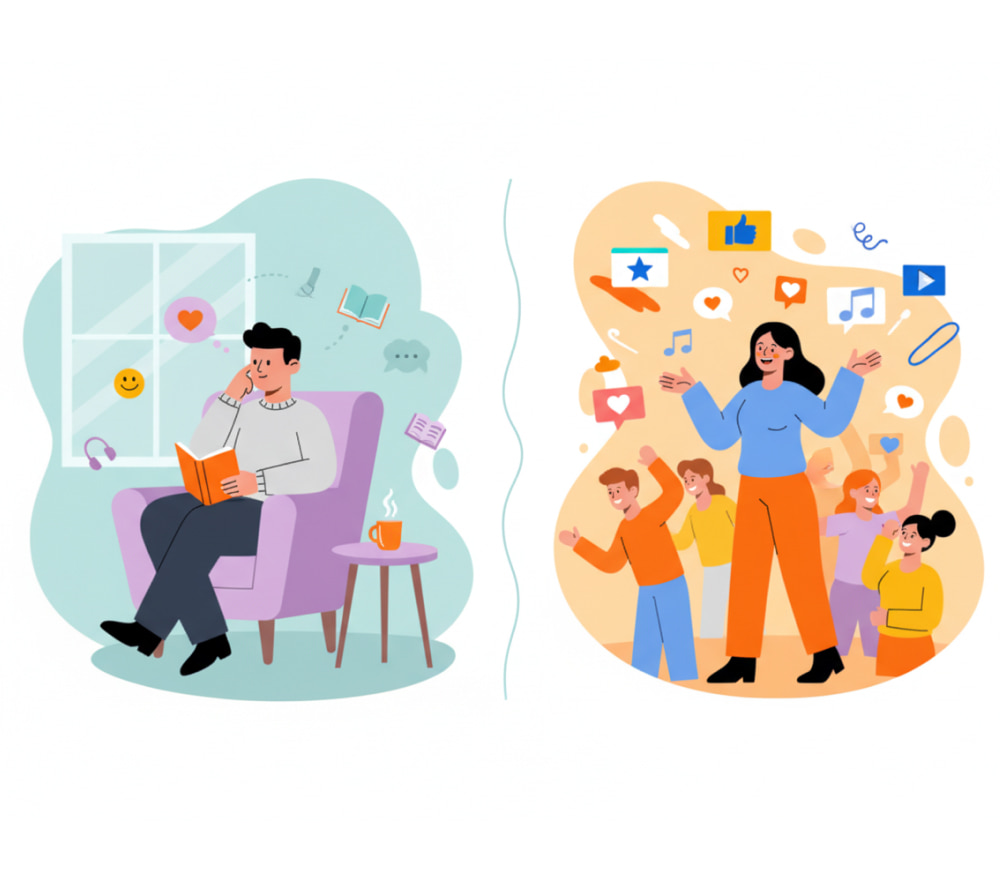
Introvert or Extrovert Personality Test
Get StartedWhat This Assessment Measures and Why It Matters
Most people describe themselves as either quiet or outgoing, but the truth is more nuanced and situational than simple labels suggest. These assessments help you observe where you draw energy, how you reset after social demands, and what kinds of environments let you perform at your peak. They also illuminate patterns in attention, communication tempo, and tolerance for stimulation, which together paint a clearer picture of your social energy style. When designed well, they offer a practical lens on everyday behavior, not a rigid identity.
At its core, the introvert extrovert quiz organizes your preferences along a continuum rather than forcing a binary choice, so you can see gradations instead of absolutes. Researchers often emphasize that context and development matter, meaning your preferences can shift over a lifetime or across settings. This is why a balanced interpretation blends item scores with real-life reflection, giving you actionable insight instead of a static label. With that mindset, you can turn results into strategies that actually improve your daily experience.
Long-form assessments also examine orientation to reflection versus action, sensory thresholds, and recovery habits after social interaction. In that way, the personality quiz introvert extrovert becomes a springboard for better boundaries, clearer self-advocacy, and smarter collaboration. You might discover, for instance, that you love conversation but need quiet planning time to do your best thinking. Such clarity can ease friction with teammates and loved ones who operate differently, while honoring your own preferences without apology.
- Energy source: solitary recharge or social engagement
- Stimulation tolerance: low, moderate, or high sensory input
- Communication style: contemplative pacing or rapid exchange
- Focus style: deep work blocks or frequent context switching
How Question Design and Scoring Work
Good assessments feel conversational, yet they are carefully constructed to sample behavior across multiple contexts and time horizons. Items often appear in pairs to cross-check consistency and reduce response bias, and they use balanced wording so one preference isn’t framed as better than another. Many also rotate social, cognitive, and environmental prompts to capture a fuller picture. Behind the scenes, scale reliability and item discrimination help ensure the score reflects stable tendencies rather than mood-of-the-day noise.
Comparative items can highlight subtle differences between group settings and one-on-one conversations, which is why the introvert vs extrovert quiz often spreads similar themes across distinct scenarios. You might be asked how you feel at networking events, in brainstorming meetings, or when planning a solo project. Each vignette draws out a different aspect of social energy and decision speed. Together they produce a score profile that’s richer than any single question could provide.
Some versions estimate middle-ground tendencies and present results in bands or zones, and the am i introvert extrovert or ambivert quiz uses that approach to show overlap rather than a hard line. Instead of a single label, you may see sliders that indicate where you sit today across energy, stimulation, and expression. Retesting after meaningful life changes can be insightful too, especially when your environment shifts in a way that alters how you restore energy or approach collaboration.
- Question styles: Likert scales, situational choices, frequency checks
- Scoring outputs: categorical labels, percentage splits, or spectrum sliders
- Quality markers: internal consistency, clear definitions, and transparent feedback
Benefits for Personal Growth and Communication
Self-knowledge is practical when it shapes the way you plan your day, protect your energy, and handle conversations that matter. People who understand their social battery can schedule tough meetings after recharge time, or build decompression routines after busy events. Teams benefit too, because coordination improves when you sync brainstorming rhythms, decision timelines, and communication channels with everyone’s natural pace. That’s how an assessment moves from curiosity to meaningful life upgrades.
Career clarity improves when you understand whether you prefer deep-focus work or dynamic collaboration, and the are you introvert or extrovert quiz can spotlight those leans without judgment. You might realize that you thrive in roles with structured collaboration and long independent blocks. Or you might learn you excel when activities shift often and involve frequent stakeholder interaction. Either way, the insight helps you choose projects and environments that fit.
Relationship harmony grows when partners respect different recharge styles, and a thoughtfully built quiz are you an introvert can spark supportive conversations rather than labels. Instead of arguing about how much social time is “normal,” you can negotiate shared plans that honor both people’s batteries. The same thinking applies to friendships and community commitments, where clarity can prevent overbooking and social burnout while preserving connection and joy.
- Plan your week around energy highs and lows
- Match meeting formats to communication comfort
- Set boundaries that protect recovery time
- Choose roles and projects that fit your social rhythm
Quick Comparison of Behavioral Tendencies
It helps to contrast how different energy styles typically behave across common situations like meetings, parties, or creative work. Remember that these are patterns, not prescriptions, and that any person can show a mix depending on context. Still, seeing side-by-side tendencies can make application easier when you’re planning your calendar or setting expectations with teammates. Use the guide below to map your behaviors to practical choices that support your energy.
Many people identify with traits from multiple sides at once, and an inclusive introvert extrovert ambivert quiz acknowledges that blend gracefully. You may find that your meeting preference depends on topic novelty, or that your social appetite varies with group size and noise level. With that nuance, you can craft more flexible routines that avoid one-size-fits-all rules. Consider this simplified comparison as a starting point for tailoring your day.
| Context | Leans Introversion | Ambivert Middle | Leans Extroversion |
|---|---|---|---|
| Energy Source | Solitary recharge after events | Mix of solo time and short social boosts | Social engagement fuels momentum |
| Work Style | Deep focus, fewer interruptions | Alternates between solo and group sprints | Collaborative, frequent touchpoints |
| Communication | Reflect-then-speak pacing | Adapts to room tempo | Think-aloud brainstorming |
| Social Settings | Prefers small groups or quiet venues | Comfortable across varied group sizes | Enjoys buzz of large gatherings |
| Recovery | Needs quiet decompression | Short resets between activities | Recharges while still engaged |
Sometimes you’ll notice traits from both sides in the same day, and a reflective introverted and extroverted quiz can help you track those shifts over time. Keep notes on what kinds of tasks drain or refuel you, and check patterns weekly. With that data, you can fine-tune meeting loads, social commitments, and focus blocks to fit your natural cadence. Small adjustments add up to smoother weeks and sustained energy.
- Pair high-stimulation tasks with buffer time
- Alternate collaboration with quiet execution
- Match venue choice to desired energy level
From Insight to Action: Career, Study, and Family Use Cases
Turning insight into action starts with calendar design and continues with communication agreements. Professionals can batch deep-focus tasks, protect silent mornings, or cluster collaboration into energizing blocks. Students might choose study spaces that match their stimulation threshold and create rituals that signal the brain it’s time for concentration. Families can coordinate plans that balance social outings with restorative time, preventing burnout while keeping connection strong.
Team workshops often begin with a short self-assessment, and an adaptable extrovert introvert quiz can be a neutral way to open dialogue about work norms. With shared language, groups can align on meeting length, prep time, and decision cadence without personalizing differences. Leaders can also build agendas that blend silent brainstorming with live discussion so everyone contributes at their best. The result is higher-quality output and less friction.
Parents and teachers can introduce energy-awareness early, and a friendly introvert extrovert quiz kids helps children describe how they like to learn and play. That knowledge supports classroom seating choices, recess routines, and homework setups that fit each child’s needs. As children mature, they can practice advocating for the conditions that help them thrive, which builds confidence and self-management skills that last well beyond school years.
- Design your environment: light, noise, and seating matter
- Negotiate communication norms: prep, pacing, and formats
- Track recovery habits: sleep, solitude, and movement
FAQ: Common Questions Answered
How accurate are these quizzes?
They are informative when they combine clear definitions with consistent scoring and transparent feedback. Accuracy improves when you answer based on typical weeks rather than rare events, and when you compare results with your lived experience. For a balanced perspective, try multiple measures over time and look for converging patterns. In many cases, the am i introvert or extrovert quiz is most useful as a structured reflection tool rather than a diagnosis.
Can my results change over time?
Yes, life stages, job demands, and health can meaningfully shift your preferences. Major events like becoming a parent, changing roles, or moving to a new city can alter social energy and recovery needs. Track your experience for a few months and retest periodically to see trends. If you notice big swings, a careful introverted or extroverted quiz taken after routines stabilize can give a clearer reading.
Are introversion and shyness the same?
No, shyness is about social anxiety, while introversion concerns energy orientation and stimulation tolerance. An introvert can be socially skilled and confident, just strategic about downtime. An extrovert may feel anxious in some settings yet still recharge around people. Focus on energy patterns and recovery needs rather than assumptions based on talkativeness alone.
How should teams use results without stereotyping?
Use scores to guide the process, not to pigeonhole people. Set norms that give options: agendas with pre-reads, hybrid brainstorming, and flexible meeting sizes. Encourage individuals to share what helps them contribute, then iterate based on outcomes. The goal is to align workflows with energy realities while keeping roles and opportunities open.
What’s the best next step after getting my results?
Start with one or two small experiments that fit your profile, such as placing high-stakes conversations after recovery time or batching interruptions. Measure how you feel and how your output changes, then adjust week by week. Over time, you’ll assemble a personal playbook for steady energy and better collaboration.